data privacy compliance firm Camano Island, Washington
Regulatory Framework Alignment & Security Auditing
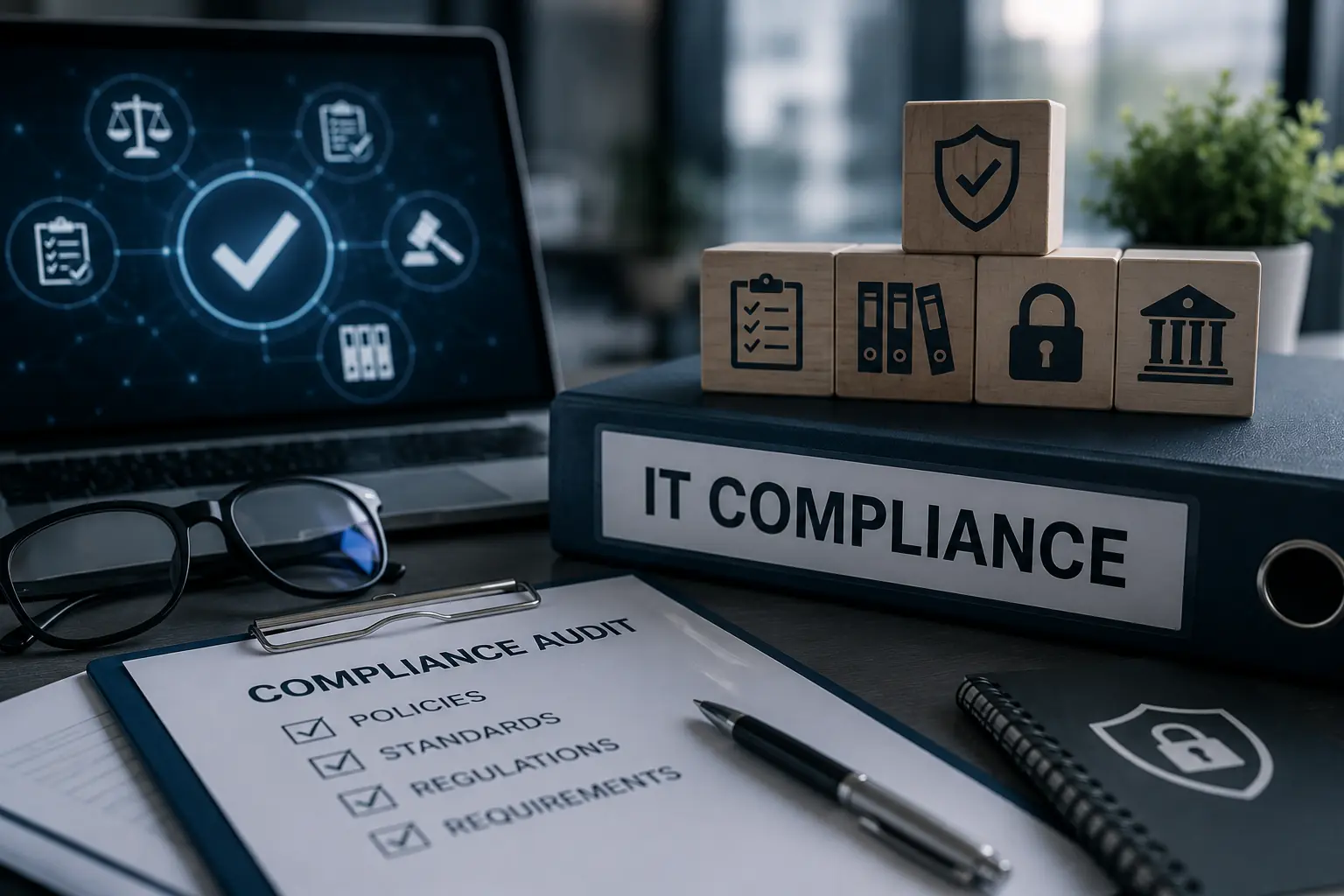
IT Compliance Service in Camano Island, Washington
Maintaining regulatory alignment in a hyper-connected digital economy requires a deeply structured, continuous approach to governance, risk, and compliance (GRC). Our IT Compliance & Risk Management solutions provide organizations with the deep technical expertise and engineering oversight necessary to achieve, maintain, and validate adherence to major industry frameworks, including HIPAA for healthcare metrics, PCI-DSS for secure payment processing, SOC 2 for cloud service providers, and NIST or CMMC for stringent government and defense contracting. We begin each initiative with a comprehensive gap analysis to baseline your current security posture against relevant statutory requirements, identifying subtle vulnerabilities in data encryption, active user access controls, logging procedures, and vendor risk profiles.
You get it, the subject of it compliance is just one of those things in life you have to trust a professional to do. So feel free to skip all the reading and click the button below to get a quote now, or scroll down to learn more.
Get A QuoteFrom there, our compliance engineers construct a precise remediation roadmap, implementing the required technical safeguards, drafting robust security policies, and establishing automated, continuous monitoring systems to capture audit-ready logs in real time. When it comes time for official third-party examinations or annual validation cycles, our team provides full hands-on audit support, defending your controls and translating complex technical telemetry into clear documentation for assessors. By proactively identifying internal risk vectors and keeping your systems structurally aligned with ever-changing data privacy laws, we eliminate the catastrophic threat of non-compliance fines, minimize operational downtime, and position your company as a trusted market leader.
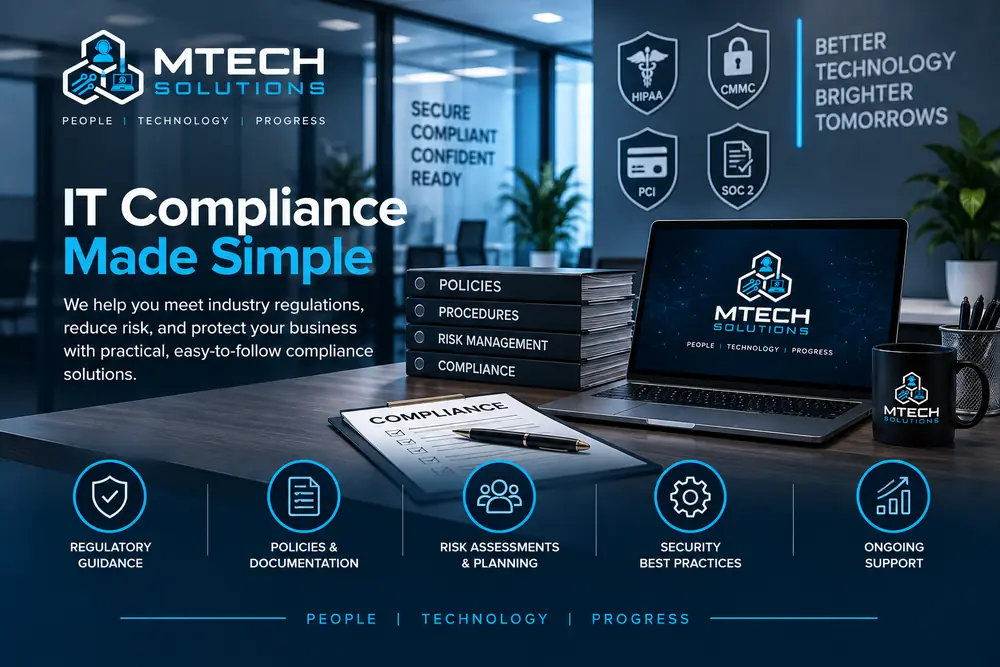
Helpful Compliance and Risk Resources
Compliance is easier to manage when access, security, backups, documentation, and employee processes are handled consistently. These guides cover common risk areas.
Cyber Insurance IT Checklist for Small Businesses
Microsoft 365 Security Checklist for Small Businesses
Business Continuity vs Backup vs Disaster Recovery
IT Compliance FAQs
IT compliance means your technology, security, policies, and data handling practices align with industry or regulatory requirements. This can involve areas like access control, cybersecurity, backups, documentation, risk assessments, and employee processes.
MTech can help businesses review their IT environment, identify security gaps, improve documentation, and implement practical controls that support compliance goals. We do not replace your legal, audit, or compliance advisor, but we help manage the IT side.
Compliance matters because small businesses often handle sensitive customer, employee, payment, health, legal, or financial data. Strong IT controls can reduce risk, improve trust, and help your business respond better to client or insurance requirements.
Common areas include multi-factor authentication, user access, device security, email protection, backups, vendor access, endpoint protection, patching, logging, policies, and incident response planning.
Yes. Many compliance controls also strengthen cybersecurity. Better access control, MFA, backups, documentation, and monitoring can help protect the business even when there is no formal audit requirement.