What Is Included in Managed IT Services? Bothell, Washington
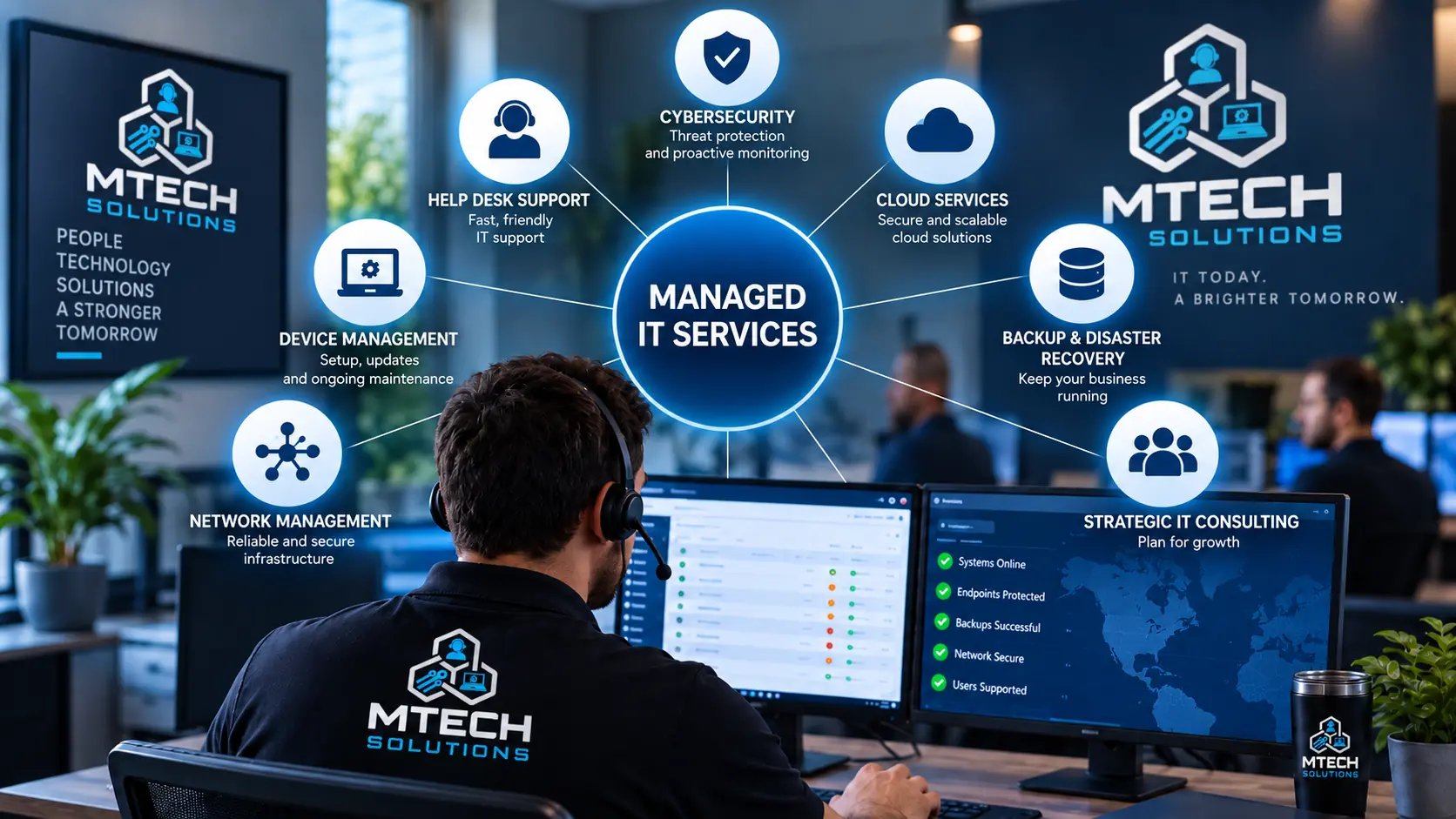
What Is Included in Managed IT Services?
When business owners compare IT providers, one of the first questions they ask is simple:
What is actually included in managed IT services?
That is a good question.
Managed IT should be more than someone fixing computers when they break. A strong managed IT provider should help support your employees, protect your systems, reduce downtime, manage cloud tools, monitor devices, coordinate vendors, and help your company plan ahead.
At MTech, managed IT is designed to make technology easier to manage and less disruptive to your business.
Here are the main areas usually included in managed IT services.
Help Desk Support
Help desk support gives employees a clear place to go when they need technology help.
This may include:
- Password issues
- Email problems
- Printer issues
- Software errors
- Slow computers
- Microsoft 365 support
- File access problems
- Remote work issues
- General troubleshooting
Good help desk support helps employees get back to work faster.
Remote and Onsite Support
Many IT issues can be resolved remotely, which allows for faster response.
But some issues require onsite help. Hardware failures, network problems, Wi-Fi issues, workstation setup, server issues, and office moves may need hands-on support.
A strong IT provider should be able to support both.
Device Management
Your computers should not be unmanaged or forgotten after setup.
Managed IT can include device monitoring, patching, software maintenance, security tools, asset tracking, and lifecycle planning.
This helps reduce surprise failures and keeps devices more consistent across the company.
Microsoft 365 Management
Many businesses rely on Microsoft 365 every day.
Managed IT can help with:
- User accounts
- Teams
- SharePoint
- OneDrive
- Password resets
- License reviews
- MFA
- Security settings
- User onboarding and offboarding
Microsoft 365 is powerful, but it needs proper administration.
Cybersecurity Protection
Cybersecurity should be part of managed IT.
This may include endpoint protection, email security, MFA, patching, security monitoring, password policies, user permissions, and employee training.
The goal is not to make security complicated. The goal is to reduce common risks in a practical way.
Backup and Business Continuity
Backups are critical.
Managed IT should help review what data is backed up, how often backups run, where backups are stored, who checks them, and how recovery would work during an outage.
Backups should be monitored and tested, not just assumed.
Network Support
Your network is the foundation for many business systems.
Managed IT may include support for firewalls, switches, wireless access points, internet connectivity, VPN, guest Wi-Fi, VLANs, and network troubleshooting.
A weak network can cause slow systems, connection drops, poor VoIP quality, and file access problems.
Vendor Coordination
Many business technology problems involve outside vendors.
That may include internet providers, software companies, phone providers, copier vendors, QuickBooks support, cloud platforms, and hardware manufacturers.
A managed IT provider can help coordinate with those vendors so your team is not left trying to explain technical issues alone.
IT Documentation
Good IT support depends on good documentation.
This may include information about systems, vendors, accounts, network equipment, licensing, servers, backups, security tools, and support procedures.
Without documentation, every issue takes longer to solve.
Strategic IT Planning
Managed IT should help your company plan ahead.
That includes device replacements, software renewals, cybersecurity improvements, Microsoft 365 changes, cloud planning, backup reviews, network upgrades, and budgeting.
The best IT support is not only reactive. It helps leadership make better decisions.
How MTech Helps
MTech provides managed IT services for businesses that want reliable support, stronger security, and clearer technology planning.
We help with help desk support, Microsoft 365, cybersecurity, backups, network support, vendor coordination, documentation, and strategy.
Our goal is to help your technology work better so your team can stay focused on the business.
If you are comparing support models, read Break-Fix IT vs Managed IT Services.
Final Thoughts
Managed IT services should give your business a complete support model.
That means supporting employees, protecting systems, reducing downtime, and helping leadership plan ahead.
If your current IT support only responds when something breaks, it may be time to consider a more proactive model.
Schedule an IT assessment with MTech and let’s review what your business needs covered.